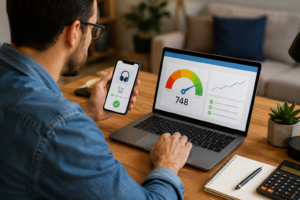
Feeling weighed down by credit card debt? Here’s why personal loans are becoming the preferred solution
Are you feeling weighed down by credit card debt with interest rates soaring above 22% APR? Discover how personal loans can help reduce your expenses, explore the current rates following the Fed's recent hike, and find out the best time to make the switch.
Beware: minimum payments keep you stuck in debt
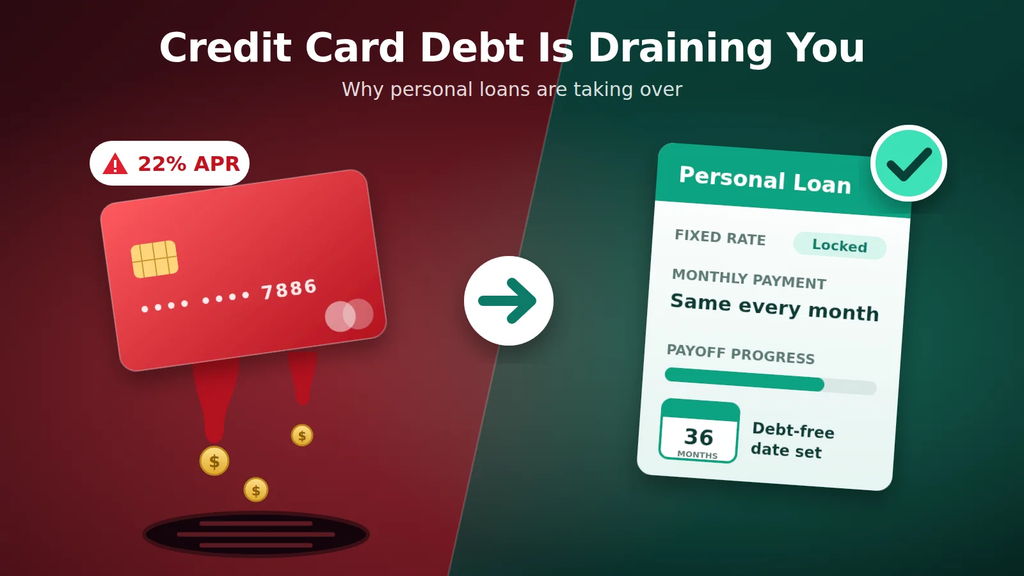
Credit card debt is draining your finances, and it’s more than just a feeling.
If you checked your September credit card statement and noticed both back-to-school expenses and a balance that won’t budge, you’re far from alone.
According to the Federal Reserve Bank of New York, Americans now owe a staggering $1.263 trillion in credit card debt.
The outcome: millions are quietly shifting their credit card balances into personal loans.
These loans offer fixed interest rates, set monthly payments, and a definite payoff date. Here’s what’s driving this trend, the data behind it, and how to decide if it’s right for you.
H2: Why Credit Card Debt Is Draining You Right Now
The latest figures from the Federal Reserve reveal that the average APR on credit cards charging interest is 22.15%. Rates vary by credit quality, too. According to WalletHub, new offers average 27.01% for fair credit and 23.27% for those with good credit.
With an APR of 22.15%, carrying an average balance of $7,886 means you’re paying roughly $146 a month just in interest. That’s money that doesn’t reduce what you owe.
The September Fed rate hike makes things worse
The FOMC unanimously voted 12–0 to increase the federal funds rate to a range of 3.75%–4.00%.
Fed Chair Kevin Warsh stated that “inflation remains too high and has persisted for too long.” Currently, inflation sits at 3.4%, with 16 out of 18 officials anticipating at least one more rate hike before the year ends.
The majority of credit cards carry a variable APR linked to the prime rate, so this increase impacts you immediately.
Ted Rossman, former lead analyst at Bankrate, notes that Federal Reserve rate changes “typically reach consumers within one to two months” and influence both new purchases and existing balances.
Back-to-school expenses have just arrived
Charges from August are now appearing on September credit card statements. According to a NerdWallet poll, 19% of parents expected to carry credit card debt due to back-to-school expenses, while 24% intended to use Buy Now, Pay Later options.
An Increasing Number of People Are Falling Behind
The New York Federal Reserve reported that the portion of credit card balances classified as seriously delinquent (90+ days overdue) climbed to 6.97% during the second quarter of 2026.
Joelle Scally, Economic Policy Advisor at the New York Fed, cautioned that “new delinquencies on auto loans and credit cards continue to stay at high levels.”
How Much Could You Save by Making the Switch?
Can consolidating improve your credit score?
Yes, it often does. According to a TransUnion report, 68% of people who consolidated their debts experienced an increase in their credit scores by more than 20 points.
The average credit card balance dropped from $14,015 to $5,855. “Debt consolidation loans tend to fulfill their intended purpose,” explained Liz Pagel, former SVP at TransUnion.
Is a Personal Loan the Right Choice for You?
When a personal loan is a good option
- Your new loan’s APR is noticeably lower than your credit card’s rate, including fees;
- You can comfortably handle the fixed monthly payments;
- You’re determined to avoid racking up your cards again after paying them off;
- Your credit score is at least 690, qualifying you for better rates.
Beware of These Potential Pitfalls
- Origination fees: some lenders take these from your loan amount, so compare APR rather than just the interest rate;
- Fair or poor credit: average rates between 23.73% and 27.27% might not be better than your card’s;
- Increasing delinquencies: personal loan late payments (60+ days) rose to 3.81%. Borrow only what you can repay;
- Don’t rely on a rate cap: the suggested 10% credit card interest cap isn’t law yet. Waiting could cost you months of extra interest.
How to Move From Credit Card Debt to a Personal Loan in 5 Simple Steps
Step 1: Record Every Card Balance and Interest Rate
Before reaching out to any lender, it’s important to know exactly how much you owe and what that debt is costing you. Gather your latest statements for each card and note down:
Find the “Interest Charge” section on each statement. This is the amount you pay monthly that doesn’t reduce your principal balance at all.
The typical balance stands at $7,886 with an average APR of 22.15%. That works out to roughly $146 in interest every month.
Step 2: Check Your Credit Score for Free
Your credit score heavily influences the interest rate you qualify for. The gap between different score ranges can be significant:
Data source: NerdWallet, September 2026.
Most banks and credit card companies let you check your credit score at no charge.
For comprehensive credit reports, visit AnnualCreditReport.com, the official site offering free weekly credit reports from Equifax, Experian, and TransUnion.
Step 3: Get Prequalified by at Least Three Lenders
Prequalifying lets you see your potential interest rate, loan amount, and monthly payments without affecting your credit score, since lenders perform only a soft credit check.
Your credit score is impacted only when you submit a formal loan application, triggering a hard inquiry.
Be sure to include at least one lender from each of these categories:
- Online lenders: fast decisions, often with funding in days, and easy online prequalification;
- Banks: may offer lower rates if you’re already a customer. The Fed reports 11.86% as the average on 24-month bank personal loans;
- Credit unions: federal credit unions are generally limited to an 18% APR ceiling. That makes them a strong option if your credit isn’t perfect.
Pro tip: seek out lenders that provide “direct pay to creditors.” This feature ensures the funds go straight to your credit card companies, so the money never hits your checking account.
Step 4: Evaluate APR, Fees, and Overall Loan Cost
The advertised rate rarely tells the whole story. Review each offer carefully on these factors:
- APR, not just interest rate: APR accounts for origination fees, revealing the true annual cost;
- Origination fee: some lenders deduct it upfront. Example: with a 5% fee, you’d need to borrow about $8,301 to get $7,886 to clear your cards;
- Loan term: longer terms reduce monthly payments but increase total interest paid;
- Prepayment penalty: confirm you can repay early without penalties.
This example shows how loan length affects the cost for $7,886 at a 19.55% APR:
H3: Step 5: Pay Off Your Credit Cards Immediately and Enable Autopay
After your loan is approved and the funds arrive, take action that same day:
- Pay every card balance in full. If your lender offered direct pay, confirm the payments went through;
- Check each card account a few days later to confirm a $0 balance. Interest charged in the last cycle can leave a small leftover amount;
- Set up autopay on the new loan so you never miss a payment. Some lenders also give a small rate discount for autopay;
- Keep your card accounts open. Closing them can hurt your score by increasing your credit utilization and shortening your credit history.
Paying off your credit cards reduces your credit utilization ratio, which is one of the quickest ways to boost your credit score.
A TransUnion report revealed that 68% of consumers who consolidated their debt saw their credit score increase by over 20 points.
Step 6: Safeguard Your Progress to Prevent Debt from Returning
This is a common pitfall. Paying off credit cards with a loan only works if you keep those card balances at zero.
If not, you risk accumulating twice the debt.
- Take your cards out of your wallet and remove saved cards from online stores and apps;
- Plan ahead for the holidays. Holiday shopping is weeks away, so set a cash budget now, before the season starts;
- Build a small emergency fund, even $500 to $1,000. Most people rack up card debt again because of an unexpected expense, like a car repair or a medical bill;
- Turn on spending alerts in your card apps so any new charge shows up right away;
- Use your cards for one small bill only, such as a streaming service on autopay. That keeps the account active without letting a balance build up.
Author’s Perspective
Having reported on personal finance for over ten years, I can confidently say this moment feels unique.
Card balances have reached record levels, with APRs topping 22%, and the Fed has raised rates rather than lowered them.
Families carrying balances are feeling pressure from all directions. I’ve seen too many wait for rates to fall or for government limits, while interest fees silently drain hundreds each month.
Personal loans aren’t a cure-all, and they don’t suit everyone. If your credit score is fair or low, the numbers might not add up, and speaking with a counselor could be a smarter first step.
However, if you can secure a significantly lower fixed rate, locking it in before the next rate hike could be one of the smartest moves this fall.

Recommended Content
Your flood coverage could end this month
Find out what happens when coverage lapses, how NFIP renewals work, and what you should verify beforehand.
Continue reading * You will remain on the current website