
Tap, Pay, Go: Exploring the Psychology Behind Contactless Payments
If you’re regularly tapping your credit card to pay, it might be a good idea to take a closer look and better understand how this payment method really works…
Why Do We Choose Tap-to-Pay?
Since the Covid pandemic, NFC-enabled cards and smartphone digital wallets have become more widespread, turning the simple tap of a card into an everyday habit.
Though it seems small, this action greatly affects how we spend money, make choices, and view the value of what we pay.
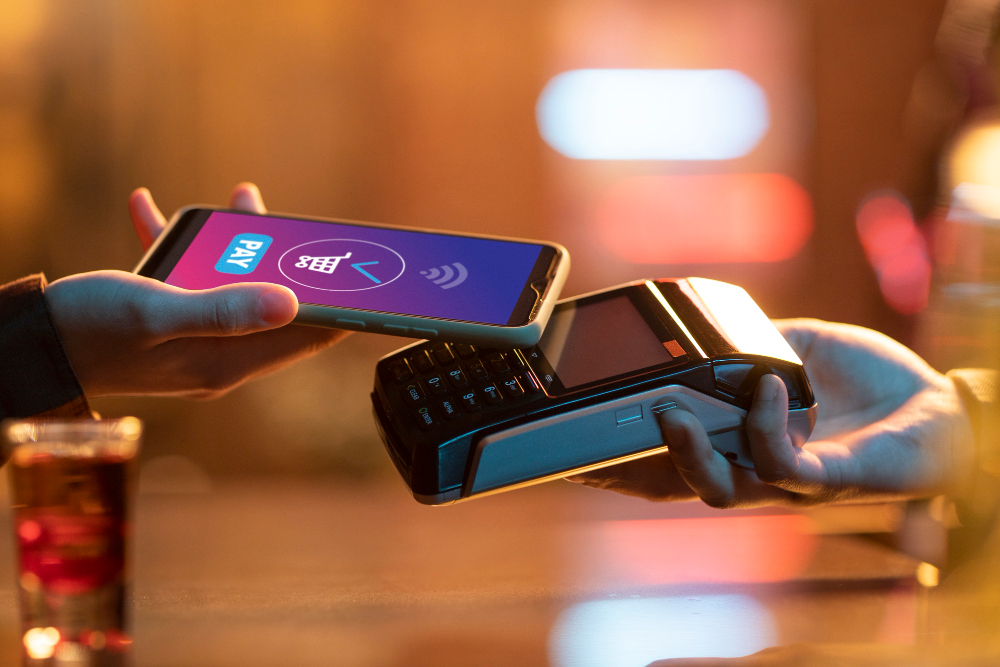
Behavioral science plays a role here by examining how our mental and social influences shape the financial decisions we make.
Decoding the Psychology Behind “Invisible Money”
One important concept in behavioral economics is known as the “pain of paying”, which refers to the emotional discomfort people feel when parting with money.
Using cash, for example, creates a more vivid sense of loss: handing over a $50 bill and receiving change makes the expense tangible and more impactful.
Credit cards have already diminished this pain by introducing a delay between making a purchase and the actual withdrawal of funds from your account.
Contactless payments take this a step further: no need to insert a card or type in a PIN code.
The payment is completed immediately and often goes unnoticed, which lowers our conscious awareness of spending.
The quickness and simplicity of the payment process make spending feel lighter, reducing any emotional impact.
Money shifts from a tangible object to just a sound, a subtle signal, or a notification appearing on your device.
Convenience as a Behavioral Influence
Convenience plays a major role in U.S. culture, visible in everything from fast-food outlets to Amazon and countless other companies.
Yet this convenience carries a psychological complexity: as the delay between desire and fulfillment shrinks, impulsive purchases tend to increase.
The Cycle of “Tap, Pay, Tap Again”
This repeated pattern quickly becomes almost automatic. A shopper walks in, selects items, taps their card or phone to pay, and leaves without much thought.
There’s no chance to reflect, no break to consider the cost, and little conscious sense of money leaving the wallet.
This impulsive habit is reinforced by instant benefits: speedy checkout, effortless process, and frequently, rewards programs integrated with Apple Pay, Google Pay, or retailer apps.
As a result, spending gets tied to positive feelings on a nearly unconscious level.
In behavioral psychology, this is called “operant conditioning”: behaviors that are rewarded immediately tend to be repeated more frequently.
Financial and Social Impacts
Contactless payments offer obvious advantages—like speed, hygiene, and ease—but they also bring financial risks.
Studies from U.S. banks reveal that individuals who depend heavily on digital payment methods often carry higher credit card balances.
This also shifts our sense of value; when purchases are made with just a tap, spending $5 or $50 can feel almost identical.
On a social level, the rise of tap-to-pay tends to widen disparities. Many Americans still lack access to NFC-enabled cards or smartphones that support this technology.
In response, states like New Jersey and Massachusetts have passed laws requiring businesses to accept cash payments, aiming to protect consumers who might otherwise be excluded.
The Future of Contactless Consumption
As technology evolves, the simple “tap” may become outdated—Amazon is already experimenting with biometric payments like palm scans at certain Whole Foods stores.
This could lead to an even more effortless payment process: just walk into a shop, grab what you want, and leave, while charges are handled automatically behind the scenes.
Since tap-to-pay has already reduced the “pain of paying,” eliminating the need for any physical movement might make that discomfort almost vanish entirely.
This points toward a future of even more automatic spending, where awareness of costs and budgeting may become increasingly distant or overlooked.
Should We Continue Using Tap-to-Pay?
Using a card or smartphone to tap and pay may seem like a small, everyday detail.
However, this simple gesture marks a profound shift in both psychology and culture.
In the United States, tap-to-pay goes beyond just technology: it embodies the relentless pursuit of convenience and speed, while also raising fresh financial and social challenges.
Behavioral science studies show that every beep from the payment device carries weight — it helps form routines, strengthens spending habits, and shifts how we perceive the value of money.

Related content
Top Apps for Learning Finance
Discover how new apps simplify teaching kids about money and finances. Explore further.nn
Keep reading * You will be directed to an external website