
When is the best time to invest? Understanding why delaying might be expensive
Wondering if there’s an ideal moment to start investing? Discover why holding out for the perfect market timing might end up costing you, and how committing to a long-term strategy can make a real difference.
Why Waiting for the Perfect Moment to Invest Is a Mistake
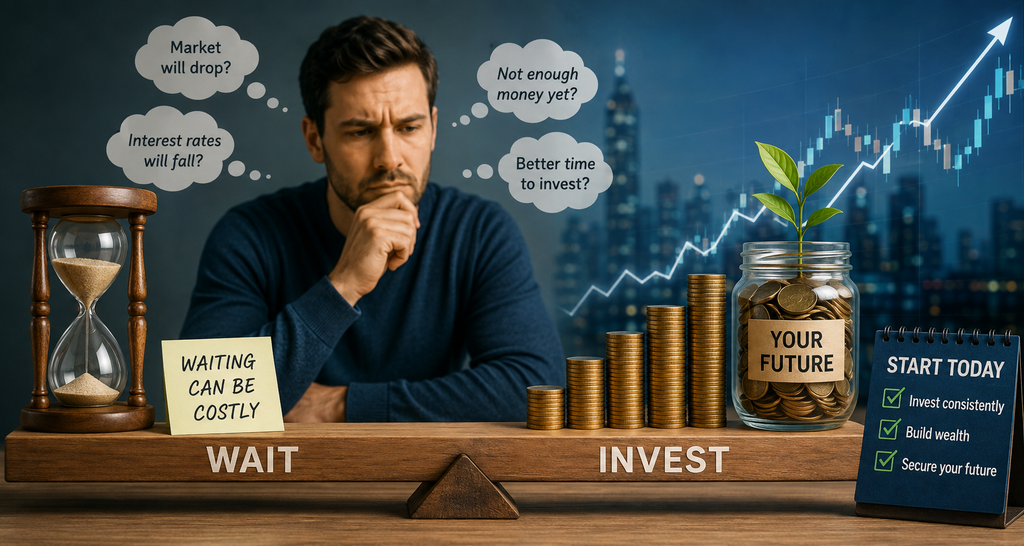
If you keep telling yourself that you’ll only invest once the market dips, interest rates drop, or certain conditions improve, you could be complicating your investment journey unnecessarily.
The reality is there’s almost never an ideal moment to invest. Markets tend to shift before most investors feel ready to act.
For those aiming to build a retirement fund, increase long-term savings, or simply begin investing, the better question might not be, “Is today the best day to invest?”
Is There Truly a Perfect Time to Invest?
In short, there isn’t a universally reliable “perfect” moment to enter the market.
Pinpointing the exact market bottom means knowing precisely when prices will stop dropping and when the recovery will start.
This is the core challenge of market timing: you must accurately decide both when to exit and when to re-enter the market.
However, this doesn’t mean you should recklessly invest funds you’ll need in the near term.
Instead, long-term investors must learn to separate creating a well-thought-out plan from endlessly waiting for ideal market conditions.
Why Putting Off Investing Often Seems Like the Safer Bet
Delaying investment can seem like a cautious financial move.
You might tell yourself:
- “The market is overpriced right now.”
- “I’ll invest after the next downturn.”
- “The Fed could adjust rates soon.”
- “Inflation remains too high.”
- “I need to build up more cash first.”
- “I want to learn more about investing first.”
These worries are perfectly natural.
The issue is that there’s always a new excuse to delay investing.
Markets can climb even when economic reports are bleak. Conversely, they may drop despite strong economic data.
Interest rates fluctuate, inflation can catch investors off guard, and geopolitical events can rapidly shift market outlooks.
No single economic indicator can precisely predict when the market will hit its next peak or bottom for an individual investor.
Why Staying Invested Often Beats Trying to Time the Market
A key distinction for long-term investors is understanding the difference between staying invested over time and trying to time the market.
Market timing focuses on the question: “When is the best time to buy?”
By contrast, a long-term investing approach asks: “How long can I remain invested based on my goals and tolerance for risk?”
These two questions are fundamentally different.
According to FINRA, some of the market’s gains and losses happen within relatively brief spans of time.
Why Trying to Time the Market Bottom Is Problematic
Everyone hopes to buy at the lowest price.
The catch is you only recognize the market bottom after it’s already passed.
Picture the market dropping by 15%.
An investor hoping for a “better entry point” might hold off, expecting a further 10% dip.
If the market bounces back instead, the investor faces a new choice: invest now at a higher price or continue waiting for another dip.
What Dollar-Cost Averaging Is and How It Can Benefit You
For those uneasy about investing at a “bad” moment, dollar-cost averaging (DCA) offers a disciplined way to invest steadily instead of waiting.
According to Investor.gov, dollar-cost averaging means putting in the same amount of money at set times, no matter what the market is doing.
When prices drop, your fixed investment buys more shares; when prices climb, it purchases fewer.
The key point isn’t the exact sum invested.
When It’s Actually Wise to Hold Off on Investing
“Don’t wait” doesn’t mean you must invest every dollar right away.
There are valid reasons why investing in the market might not be your top priority at times.
You Lack an Emergency Savings Cushion
If investing means you won’t have enough funds to handle unexpected expenses like car repairs, medical bills, or sudden job loss, it’s best to wait.
How long you plan to keep your money invested is a key consideration.
Funds you might need in the near future should usually be handled differently than money set aside for retirement decades from now.
Investor.gov highlights that both your investment time frame and comfort with risk play crucial roles in choosing the right investment strategy.
You Have High-Interest Debt
If you have high-interest credit-card debt, investing while letting the balance grow with interest can make managing your finances more complex.
It’s not just a choice between stocks and cash.
The answer might be:
paying down debt + building an emergency fund + contributing to retirement + investing, depending on your situation.
You Need the Money Soon
A portfolio aimed at a retirement target 30 years away is quite different from funds needed in the near term.
Volatility over the short term can pose significant challenges if you don’t have the flexibility to wait out a market rebound.
The longer the time frame for investing, the greater the chance to weather market ups and downs, though this doesn’t remove all risks.
Why August Is a Good Moment to Reassess Your Investment Strategy
For investors, this period offers a valuable opportunity to check if you’re staying true to the investment plan you set out to follow.
Review Your 401(k) Contributions Before the Year Ends
For 2026, the IRS has raised the employee contribution cap to $24,500 for most 401(k), 403(b), and government 457 plans.
Workers aged 50 and over can contribute an additional $8,000 as catch-up contributions, while those between 60 and 63 are eligible for a higher limit of $11,250.
Because of this, August is a convenient time to review how much you’ve contributed so far this year.
You don’t have to make any sudden or drastic adjustments right now.
Take a Closer Look at Your IRA Contributions
For 2026, the total contribution limit for both traditional and Roth IRAs is $7,500, rising to $8,600 for those aged 50 and above, according to IRS regulations.
If you haven’t begun contributing yet, the key consideration isn’t necessarily if August is the ideal month to start.
A more relevant question is whether delaying until a later month will truly benefit your long-term retirement strategy.
Avoid Letting News Headlines Dictate Your Investment Decisions
August 2026 has already brought several reasons for investors to feel uneasy.
In its July meeting, the Federal Reserve maintained the target rate between 3.50% and 3.75%, noting that inflation remains above its 2% goal.
At the same time, July’s CPI reported a yearly inflation rate of 3.4%, driven by energy costs rising 14.7% and gasoline prices climbing 24.6% over the past year.
These figures are significant.
However, they don’t determine if you should change your personal retirement strategy.
A smarter strategy is to keep economic updates distinct from your personal investment timeline.
How Current U.S. Economic Indicators Affect Investors
These economic conditions help clarify why deciding “Is now the right time to invest?” is so challenging.
- Inflation Remains Above the Federal Reserve’s Goal
- Interest Rates Continue to Play a Key Role
- The Job Market Is Holding Steady
What Major Personal Finance Outlets Overlook
Leading U.S. financial outlets already cover topics like market timing, dollar-cost averaging, and strategies for long-term investing in detail.
NerdWallet points out the challenges and risks involved in market timing, while stressing the importance of asset allocation.
Bankrate also highlights the value of maintaining consistency and regularly rebalancing portfolios instead of trying to time the market.
Its investment analysis often links market trends to Federal Reserve policies and broader economic factors.
Recently, Investopedia has explored the balance between dollar-cost averaging and market timing, providing historical insights into the pros and cons of each method.
The real editorial chance isn’t just to restate “time in the market beats timing the market.”
A more effective approach is to address the reader’s real worry: “What if I invest now and the market drops tomorrow?”
The response should recognize this risk instead of ignoring or dismissing it.
It’s true that markets may drop after you invest.
However, for those investing with a long-term horizon, a short-term dip doesn’t necessarily mean the initial choice was a mistake.
What really counts is if the investment aligns with the individual’s timeline, risk comfort, diversification, and financial objectives.
An Easy Guide to Decide Whether to Invest Now
Rather than guessing the market’s next move, focus on answering five key questions.
1. Do I Have Funds I Can Leave Invested?
If you’ll need access to the money soon, putting it into volatile investments might not suit your objectives.
If the funds are meant for a long-term objective like retirement, you’ll generally have more time to weather market ups and downs.
2. Do I Have an Emergency Fund Built?
You shouldn’t invest if it means being vulnerable to unexpected expenses that might arise soon.
Make sure you have a cash cushion that fits your needs before risking money you might require in the near term.
3. Am I Managing High-Interest Debt?
Carrying high-interest debt can significantly hinder your financial advancement.
Before prioritizing investment gains, take a close look at the interest rates on any debts you owe.
4. Am I Properly Diversified?
Concentrating your entire investment in a single stock, sector, or speculative asset carries a very different risk compared to holding a diversified mix.
Investor.gov highlights diversification and asset allocation as key strategies to help manage investment risk effectively.
5. Am I Able to Stick to the Plan When Markets Drop?
This might be even more crucial than pinpointing the ideal moment to invest.
If a drop of 15% to 20% triggers panic and selling, your portfolio could be too risky for you.
The goal isn’t to create a portfolio that never experiences losses.
The real aim is to develop a financial strategy you can confidently maintain over time.
The Author’s Perspective
One of the biggest errors people make is believing they must foresee the future to invest successfully.
But that’s simply not true.
It’s not necessary to predict whether stock prices will climb next month.
You don’t have to forecast the Federal Reserve’s upcoming moves or pinpoint exactly when inflation will settle back to 2%.
You need a strategy that addresses three fundamental questions:
This doesn’t mean you should jump into investments you don’t fully grasp.
It’s about knowing the difference between careful consideration and being frozen by doubt.
The most reliable investment habit might not be pinpointing the ideal moment.
Rather, it could be making a wise choice, setting up automation when it fits, diversifying your portfolio, and allowing your investments time to grow.
Investor.gov highlights that consistent investing over time is key to building wealth in the long run.

Recommended Content
Savings rates are dropping
Learn how lower APYs, inflation and your savings strategy can affect your money and purchasing power.
Continue reading * You will remain on the current website