
Mortgage rates climb past 7% again: essential steps for homebuyers today
Mortgage rates have climbed back over 7%. Learn what’s driving these increases, how much extra it could cost you, and the best steps for homebuyers to take today.
Mortgage rates continue to rise: what it means for homebuyers
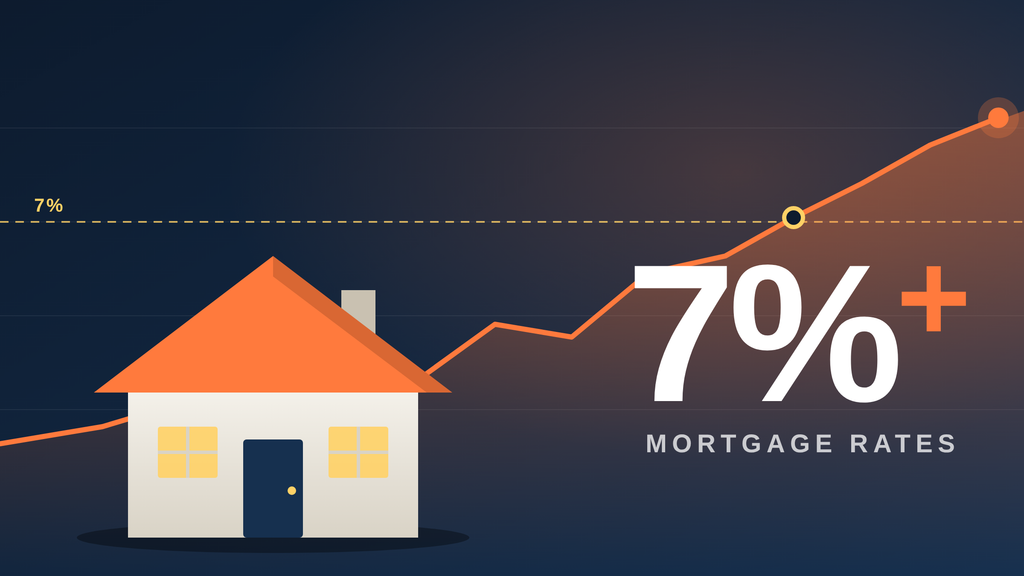
Mortgage rates are climbing once more, creating a steeper and more costly journey to homeownership for buyers across the U.S.
In October 2026, the average 30-year fixed mortgage rate hit 7.40%, increasing the cost of financing for families already challenged by high home prices.
With home prices staying elevated and inflation tightening household budgets, rising borrowing costs are making monthly mortgage payments tougher to afford.
Even those with steady incomes and strong credit may find they qualify for a smaller loan amount than anticipated.
Knowing why mortgage rates are on the rise, how much extra you might pay, and what precautions to take before applying for a loan can help you steer clear of expensive mistakes.
Before submitting an offer on a home, every buyer should understand these key points and actions to take immediately.
What’s Causing Mortgage Rates to Climb Above 7% Again?
Mortgage rates have once again surpassed 7%, driven by a mix of inflation worries, shifts in the bond market, and doubts about the broader economic future.
Freddie Mac reports the average 30-year fixed mortgage rate hit 7.40% on October 8, 2026.
It later dropped to 7.24% on October 29 but stayed above the 7% mark.
This is important because mortgage rates affect how much buyers qualify to borrow and the portion of their income spent on housing costs.
Multiple economic elements contribute to this rise.
How Inflation and Treasury Yields Impact Rates
Inflation stands as a key driver behind long-term borrowing expenses.
In September 2026, the Consumer Price Index (CPI) rose by 0.6% compared to the prior month, while the yearly inflation rate hit 3.7%, as reported by the U.S. Bureau of Labor Statistics.
Energy costs were a key driver of this rise, with gasoline prices climbing 9.1% over the month.
Increased energy prices impact transportation, household budgets, and shape wider inflation expectations.
When investors worry that inflation will stay high, they tend to seek greater returns on long-term investments.
A key indicator to watch is the 10-year U.S. Treasury yield.
Mortgage rates aren’t directly linked to this yield, though both are shaped by predictions about inflation, economic performance, and upcoming interest rate changes.
What the Federal Reserve’s Latest Decision Means for Homebuyers
The Federal Reserve’s moves on monetary policy frequently shape market expectations across the financial world.
Still, these decisions don’t directly set mortgage rates.
On October 28, 2026, the Federal Open Market Committee (FOMC) chose to keep the federal funds rate target range steady at 3.75% to 4.00%.
The Fed also noted that inflation levels remain high.
For homebuyers, it’s key to understand that the federal funds rate mainly influences short-term borrowing costs.
In contrast, 30-year mortgage rates are shaped by long-term market expectations.
This explains why a cut in the Fed’s rate doesn’t necessarily lead to lower mortgage costs.
Rather than relying solely on Federal Reserve announcements, buyers should keep an eye on Freddie Mac’s weekly mortgage rate updates and seek fresh quotes from lenders.
The Effects of Rising Mortgage Rates on Homebuyers
An increase in mortgage rates might seem minor when shown as a simple percentage.
But over a 30-year loan term, even a one-point rise in the rate can greatly affect the total amount a borrower ends up paying.
This difference is particularly significant for buyers taking out larger loans.
The Growing Challenge of Housing Affordability
Rising borrowing expenses are just one part of the challenge.
In addition, home prices and the scarcity of available properties affect how much buyers must pay.
The National Association of REALTORS® (NAR) reports that the median price for existing homes hit $417,500 in September 2026.
This marked a 1.3% rise compared to September 2025.
While existing-home sales grew 1.5% from the previous month, they still lagged 2.2% behind last year’s figures.
There were about 1.60 million homes available, which amounts to roughly 4.8 months of housing supply.
This situation poses challenges for buyers who require mortgage financing.
Even if a home’s asking price appears affordable, a higher mortgage rate can raise monthly payments enough to push the purchase beyond what a buyer can afford.
For those buying their first home, this might result in:
- Postponing homeownership.
- Considering smaller properties.
- Looking in less expensive neighborhoods.
- Saving for a larger down payment.
For current homeowners considering a move, higher mortgage rates can make it tougher to justify swapping out an older loan for a costlier one.
Key Actions Homebuyers Should Take When Mortgage Rates Climb Above 7%
Mortgage rates exceeding 7% don’t automatically mean buyers must put their plans on hold.
That said, purchasing a home now calls for more thoughtful financial planning and preparation.
Instead of just looking at the headline interest rate, buyers need to assess the overall expense involved in financing their purchase.
Below are actionable steps to take before finalizing your mortgage contract.
Get Mortgage Quotes From Several Lenders
Requesting mortgage quotes from a variety of lenders is a crucial part of the homebuying process.
Different banks, credit unions, and mortgage companies often provide varying interest rates, fees, and loan terms even to borrowers with similar credit and income profiles.
The Consumer Financial Protection Bureau (CFPB) advises that comparing Loan Estimates can reveal key differences between offers and empower buyers to negotiate more favorable loan terms.
The CFPB points out that lenders typically must deliver a Loan Estimate within three business days after receiving the six essential pieces of information needed for a mortgage application.
Make sure to evaluate the following before picking a lender:
- Interest rate: The percentage charged on the borrowed amount.
- APR (Annual Percentage Rate): A broader measure of borrowing costs that includes the interest rate and certain loan-related charges.
- Loan term: Whether the mortgage lasts 15, 20, or 30 years.
- Closing costs: Fees required to complete the transaction.
- Discount points: Upfront payments that may reduce the interest rate.
- Monthly payment: The amount due each month, considering the costs included in the estimate.
A mortgage with a lower advertised rate isn’t always the best deal.
For instance, one lender might charge a low rate but require higher discount points or steeper closing fees.
Some lenders might charge a bit higher interest but have lower upfront fees.
The key is to evaluate the overall cost, not just the advertised interest rate.
Boost Your Credit Score Before Applying
Your credit rating plays a significant role in determining the mortgage rates and loan options you qualify for.
Lenders typically review your credit history to evaluate your likelihood of repaying the loan.
Having a stronger credit history can increase your likelihood of securing more favorable loan terms.
Before submitting your application, try these actions:
- Verify your credit reports for any errors.
- Make all payments on time to avoid delinquencies.
- Lower your credit card debt where you can.
- Refrain from opening multiple new credit accounts before applying.
- Assess your current debts and monthly financial commitments.
It’s also crucial to realize that no single credit score applies universally to all mortgage types.
Each loan type—whether conventional, FHA, VA, or others—has its own credit requirements.
Buyers should inquire about which credit scoring models and criteria lenders use for the mortgage options they’re exploring.
While improving your credit profile can take some time, it often strengthens your position when securing better financing terms.
Think About Making a Larger Down Payment
Putting down more money upfront can decrease the loan amount you’ll need to finance.
This can help reduce your monthly payments for principal and interest.
As an illustration, buying a $400,000 home involves:
- 10% down payment: $40,000, with a $360,000 loan remaining.
- 20% down payment: $80,000, leaving a $320,000 mortgage.
Reducing the loan amount can have a significant impact, especially when rates are over 7%.
Putting down a larger amount might also enable some conventional buyers to skip private mortgage insurance (PMI), which usually applies if the loan-to-value ratio is above 80%, depending on specific loan and program guidelines.
Still, increasing your down payment isn’t always the most advantageous choice.
Buyers should refrain from depleting all their savings just to lower their mortgage amount.
Keeping an emergency fund is crucial, especially to cover unexpected repairs, rising insurance costs, or other household expenses.
A sensible down payment should make monthly mortgage payments easier to handle while preserving financial stability.
Understand Rate Locks and Mortgage Points
With mortgage rates shifting often, buyers might want to secure a fixed interest rate ahead of closing.
A mortgage rate lock is a commitment that shields the borrower from rising interest rates for a certain period, as long as the loan closes within the agreed timeframe and the application details remain unchanged in ways that affect the lock.
Per the CFPB, rate locks typically last 30, 45, or 60 days, though some lenders may offer longer periods as well.
Before agreeing to a rate lock, make sure to ask your lender:
- How long will the rate remain locked?
- Is there a fee to lock the rate?
- What happens if closing is delayed?
- Can the rate be adjusted if market rates fall?
- How much would an extension cost?
Another strategy is buying mortgage discount points.
These are fees paid upfront to the lender in return for obtaining a lower interest rate.
Still, the actual savings depend on the size of the rate reduction and how long the loan remains in place.
For instance, someone planning to sell or refinance within a few years might not recoup the initial cost paid for discount points.
Be sure to weigh the upfront fees against the potential long-term benefits before deciding to buy points.
Author’s Perspective
Mortgage rates climbing back above 7% serve as a crucial alert for anyone looking to buy a home in the U.S.
However, the biggest error buyers make is reacting to headlines without carefully reviewing their personal financial circumstances.
Remember, a mortgage is a long-term obligation, and the interest rate is only one factor to consider.
Costs such as property taxes, homeowners insurance, upkeep, HOA fees, closing expenses, and emergency reserves all require attention before finalizing a loan.
With the average 30-year fixed mortgage rate now at 7.40% and the median price of existing homes at $417,500, buyers are navigating a tough affordability landscape.
Here’s my straightforward advice: don’t let rising rates pressure you into a mortgage that stretches your budget beyond comfort.
Make sure to shop around with several lenders, get a clear picture of all costs, and carefully estimate your monthly housing payments before committing.
Buying a home at the lowest mortgage rate isn’t always the smartest decision.
The right timing is when the purchase aligns with your financial situation and lets you maintain stability once you’ve settled in.
Recommended content
Why savings rates may finally climb again
Learn what the Fed’s decisions mean for your money and how to compare high-yield savings accounts.
Continue Reading * You will remain on the current website